
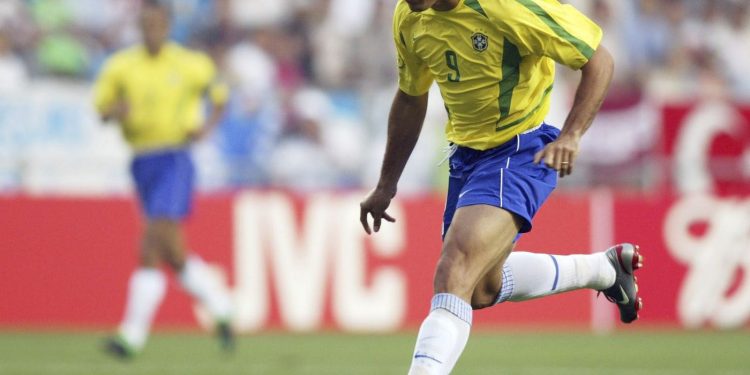
Few players have experienced the highs and lows of football like Ronaldo Luís Nazário de Lima, simply known as Ronaldo. From the heartbreak of the 1998 World Cup Final to the triumphant glory of 2002, Ronaldo’s journey is one of resilience, redemption, and the kind of brilliance that only the greatest players can summon. The 2002 FIFA World Cup Final, held on June 30 in Yokohama, Japan, marked the pinnacle of his career—a day when he silenced all doubts and cemented his legacy as one of the game’s all-time greats.
The Shadow of 1998
Heading into the 2002 World Cup, Ronaldo carried the scars of the 1998 final against France. In that match, Brazil’s talisman mysteriously underperformed after reportedly suffering a seizure hours before kickoff. Brazil lost 3-0, and Ronaldo was heavily criticized, with rumors swirling about his health and mental state.
The years that followed were no kinder. A series of devastating knee injuries sidelined Ronaldo, threatening to derail his career entirely. By the time the 2002 World Cup arrived, many doubted whether he could ever return to his former self. But Ronaldo was determined to prove the doubters wrong.
The Road to the Final
Ronaldo entered the 2002 World Cup with something to prove, and he didn’t waste any time. Paired with Rivaldo and Ronaldinho, he spearheaded an attacking trio that terrorized defenses throughout the tournament.
- Ronaldo scored in Brazil’s opener against Turkey and continued to find the net in group-stage wins over China and Costa Rica.
- In the knockout stages, he delivered crucial goals, including the match-winner against Turkey in the semifinals, sending Brazil to their third consecutive World Cup final.
By the time Brazil reached the final against Germany, Ronaldo had already scored six goals, putting him in contention for the Golden Boot. But one hurdle remained: Oliver Kahn, Germany’s formidable goalkeeper, who had been virtually unbeatable throughout the tournament.
The Final: Ronaldo’s Moment of Redemption
The stage was set at Yokohama’s International Stadium. The match began as a tense affair, with both teams probing for an opening. Germany’s defense, led by Kahn, stood firm, while Brazil struggled to break through in the first half.
Then, in the 67th minute, Ronaldo seized his moment. Rivaldo fired a low shot from outside the box, and Kahn, uncharacteristically, spilled the ball. Ronaldo pounced, calmly slotting it into the net. Brazil erupted in celebration as Ronaldo ran toward the corner flag, arms outstretched in vindication.
Twelve minutes later, Ronaldo struck again. A clever dummy by Rivaldo left Ronaldo unmarked, and he buried the ball past Kahn with a composed finish. At 2-0, the match was effectively over. Ronaldo had delivered on the biggest stage, and Brazil secured their record-breaking fifth World Cup title.
The Aftermath: A Legacy Restored
Ronaldo’s performance in the final was the perfect ending to a remarkable comeback story. With eight goals in the tournament, he won the Golden Boot and proved that he was still the phenomenon the world had fallen in love with years earlier.
The victory also cemented Brazil’s place as the most successful footballing nation in history. For Ronaldo, it was more than just a win; it was a redemption arc that inspired millions. After years of injury struggles and doubts, he stood atop the footballing world once again, a hero to his nation and an icon of resilience.
Legacy: Ronaldo, the Phenomenon
The 2002 World Cup Final wasn’t just a game—it was a statement. Ronaldo had returned from the brink of footballing obscurity to claim his place among the sport’s immortals. His two goals against Germany are etched into history as a testament to his skill, determination, and unyielding spirit.
Even now, decades later, Ronaldo’s redemption at the 2002 World Cup serves as a reminder of what makes football beautiful. It’s not just the glory—it’s the ability to rise after every fall, to defy the odds, and to leave a legacy that will never be forgotten.